 Synopsia
Twenty books on the list. Time for two.
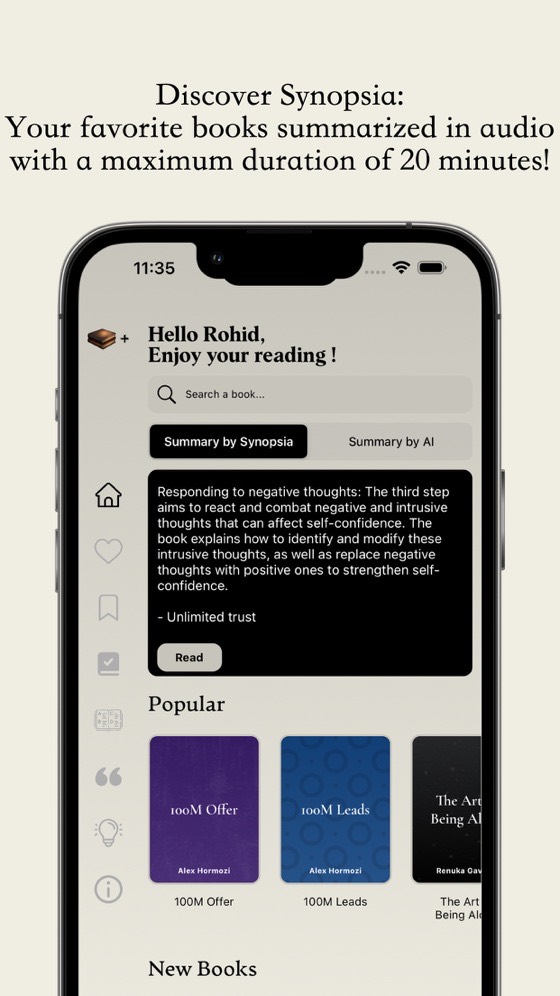
The key ideas of a book, read to you while you cook, commute or walk — so you find out which ones actually deserve the eight hours.
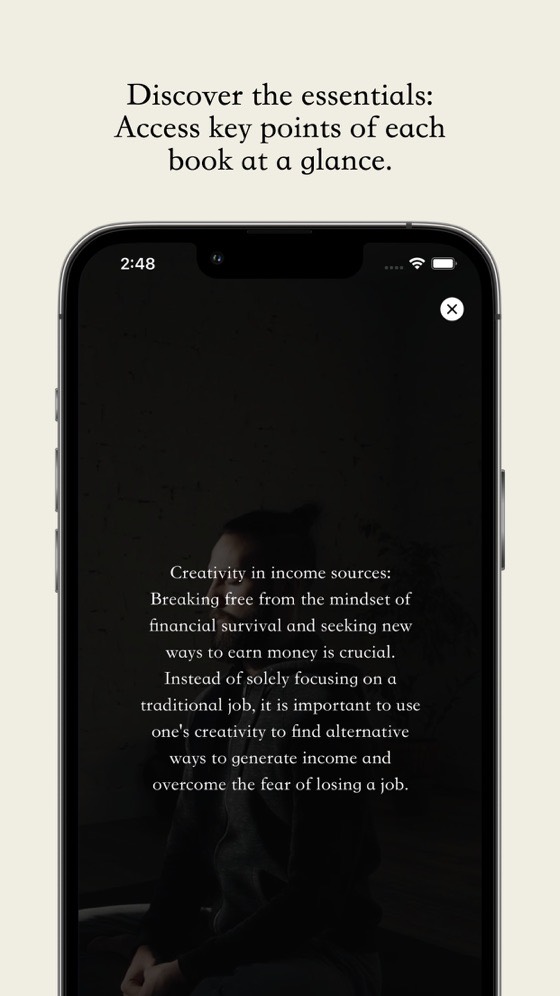
Listen or read. Bionic Reading included.
You buy the book, read forty pages, and it joins the pile. Not because it was bad — because you did not yet know whether it was for you. The hard part was never finding good books. It's finding out which good book is the one for you, right now.
Fifteen minutes instead of eight hours.
Not to replace the book. To decide about it — and to keep the ideas from the ones you will never get to.
Pick a summary
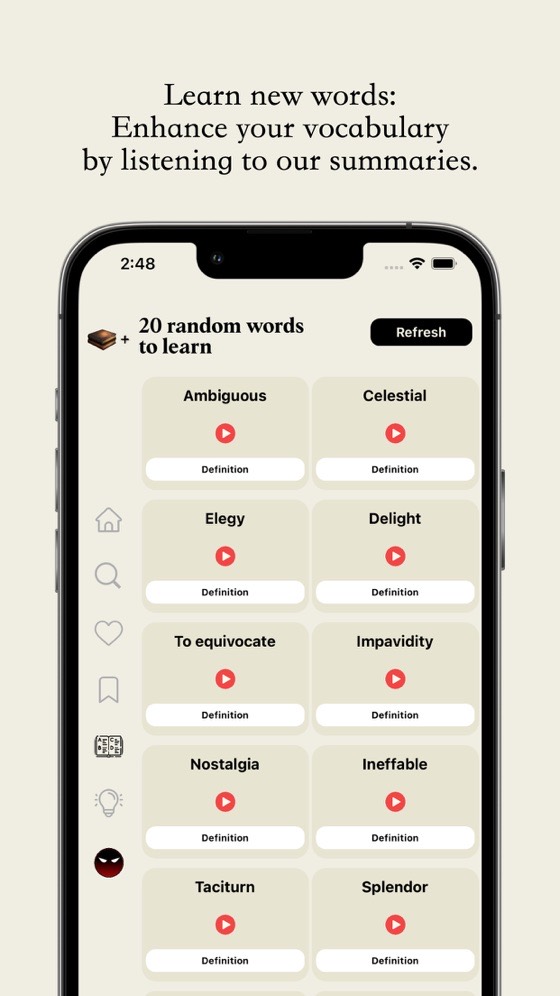
Business, personal development, health, history and fiction. The books that come up in conversation.
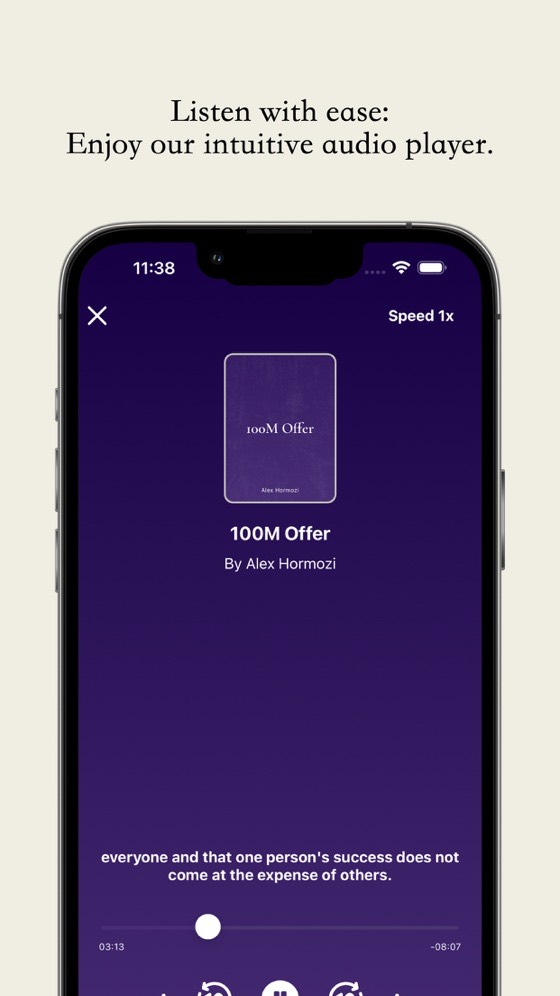
Listen while you do something else
Cooking, commuting, walking. It is audio first, so it fits where reading does not.
Decide
Either you have the ideas and that is enough, or you now know the book is worth buying.
The books people keep mentioning.
Not everything ever published — the ones that come up, across the genres where a summary genuinely carries the idea.
- Business and strategy — the ones quoted in every meeting.
- Personal development — where a summary often carries most of the value.
- Health and science — the findings without the three hundred pages of build-up.
- History and fiction — for context, and for knowing what people are referring to.
Two ways through a summary.
Audio first
Written to be listened to, not a text-to-speech pass over an article. It works while your hands and eyes are busy.
Bionic Reading
Bolded word openings to guide the eye through the text. Some people read noticeably faster with it; try it and see which you are.
Built for the gaps
A summary fits a commute, a queue or the time a pan takes to heat — the slots where a book never gets opened.
Quiet and quick.
No feed, no recommendations demanding attention. A library, a player, and what you were in the middle of.
About summaries, honestly.
What they are genuinely good for, where they fail, and how to choose between the apps.
Good to know.
Does a summary replace the book?
No, and we would rather say so plainly. A summary carries the ideas; a book carries the argument, the evidence and the examples that make the ideas stick. What a summary genuinely replaces is the twenty books on your list you will never open — and it tells you which one to actually buy.
Can I listen offline?
The app is built around listening while doing something else, which is when a connection is least reliable.
What is Bionic Reading?
A text format that bolds the first letters of each word to guide the eye. It measurably helps some readers and does nothing for others — it is there to try, not a claim.
What does it cost?
The app is free to download. Full access runs through a subscription or an in-app purchase.
Which devices?
iPhone, on a recent version of iOS.